
Our Work

HOW WE WORK

Working Together for Meaningful Change

Our approach combines research, advocacy, collaboration and capacity building to strengthen the rights, health and well-being of migrant workers and their communities.


Community discussion and participation
Community Participation
Advocacy and collaborative meeting
Advocacy & Collaboration
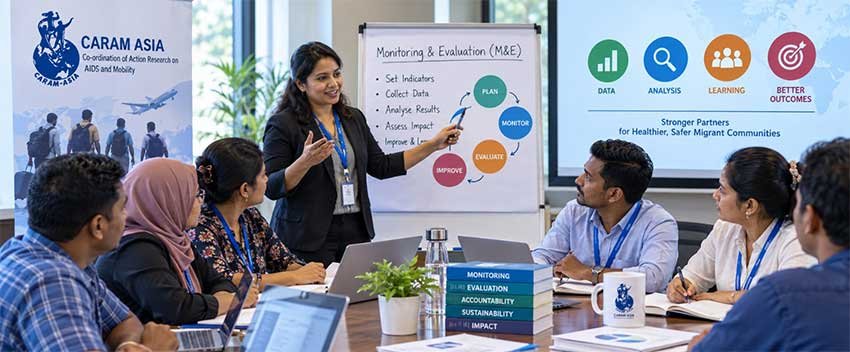
Training and capacity building
Learning & Capacity Building

We place migrant workers and communities at the centre of research, generating evidence and knowledge that can support advocacy, policy development, and community action.

We use research and community experiences to advocate for stronger policies, better protection mechanisms, and greater recognition of migrant workers' rights at national, regional, and international levels.

We bring together civil society organisations, migrant networks, community groups, governments, international organisations, and other stakeholders to strengthen collective responses.

We strengthen the knowledge, skills, and organisational capacity of migrant leaders, community organisations, NGOs, and other partners.

Building stronger communities through knowledge, collective action, collaboration and empowerment.

Areas of Work

01 Research
02 Advocacy
03 Capacity Building
04 Coalition Building
05 Public Awareness
06 Essential Services
Our Work

Advancing the Rights, Health & Well-Being

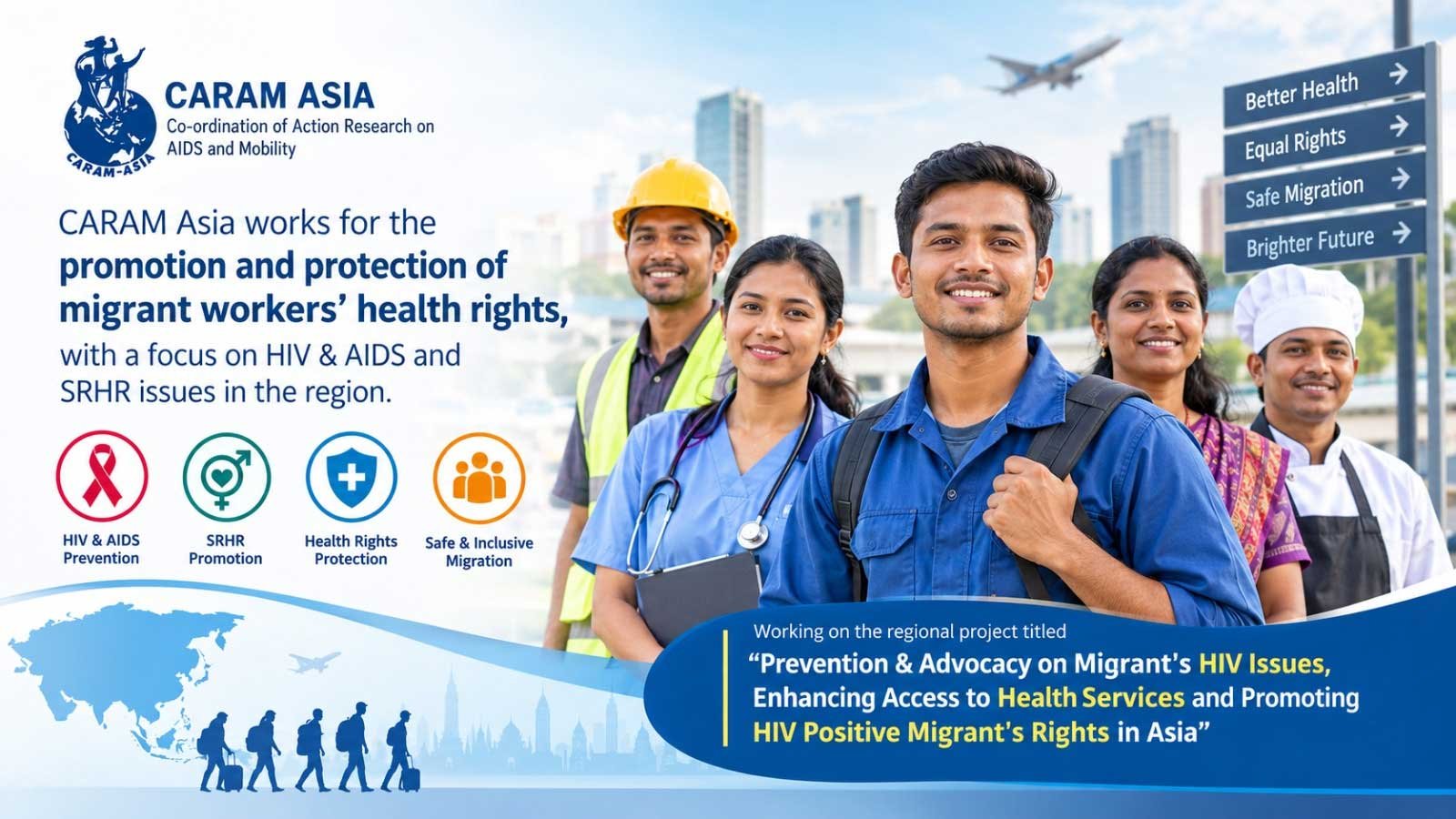
CARAM Asia works across Asia to advance the rights, health, dignity, and well-being of migrant workers.

Our work is shaped by the experiences of migrant communities and focuses on research, advocacy, capacity building, coalition building, public awareness, and access to essential services.

CARAM Asia in Action
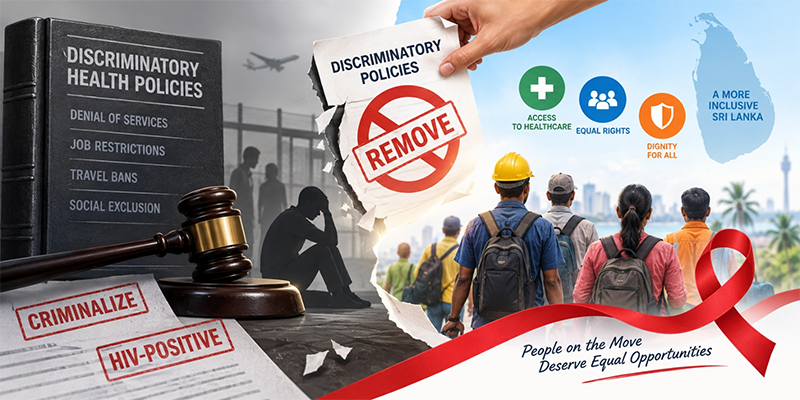
Regional Work & Engagement

By working with migrant workers, community organisations, civil society, governments, health service providers, and other partners, we seek to strengthen regional responses to the challenges faced by migrant communities.

CARAM ASIA • OUR WORK

CARAM Asia's work focuses on four interconnected thematic areas:

01

Migrant Workers’ Rights

Promoting the rights, dignity, equality, protection, and access to essential services of migrant workers.

02

Migration, Health, HIV & Well-Being

Addressing migrant workers’ health and well-being, including HIV & AIDS, sexual and reproductive health and rights, healthcare access, prevention, and stigma reduction.

03

Migration, Development & Globalisation

Exploring the links between migration and development while recognising the contributions of migrant workers and addressing inequalities associated with migration.

04

Migration, Climate Change & Humanitarian Crisis

Responding to emerging challenges linked to climate change, environmental pressures, displacement, disasters, and humanitarian crises.
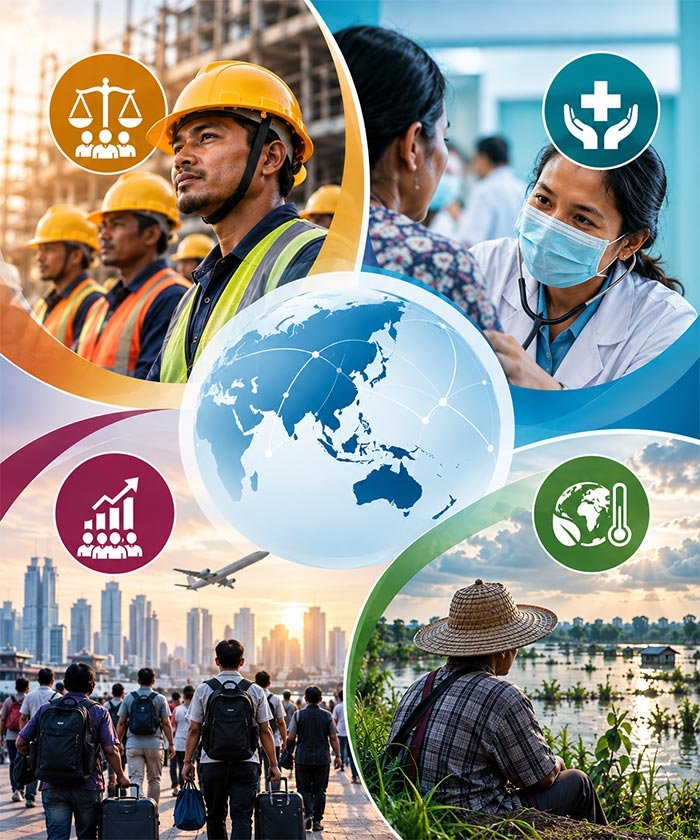
CARAM Asia Thematic Areas

Four Key Thematic Areas

CARAM Asia Task Forces

CARAM Asia’s regional programmes are prioritised in line with four key thematic areas. Each Task Force provides a framework for members and the Secretariat to contribute to regional priorities, programme development and collective action.

Migrant workers and supporters advocating for justice and rights 03

MWR Task Force

Migrant Workers’ Rights

The MWR Task Force focuses on the rights, protection, dignity and well-being of migrant workers, addressing challenges affecting their lives, employment and working conditions.

Read Document
Medical supplies and charitable support 04

MHH Task Force

Migration, Health, HIV & Well-Being

The MHH Task Force focuses on migrant workers’ health and well-being, including HIV & AIDS, healthcare access, prevention, treatment and related health and rights concerns.

Read Document

CARAM Asia team members working together 05

MDG Task Force

Migration, Development & Globalisation

The MDG Task Force explores the relationship between migration, development and globalisation, with attention to wider social, economic and structural factors affecting migrant workers and communities.

Read Document
People affected by displacement and humanitarian challenges 06

MCCHC Task Force

Migration, Climate Change & Humanitarian Crisis

The MCCHC Task Force addresses emerging challenges affecting migrant workers in the context of climate change, environmental pressures, disasters, displacement and humanitarian crises.

Read Document
TASK FORCE FRAMEWORK

How Our Task Forces Work

CARAM Asia's Task Forces bring together members around specific areas of work. Each Task Force is supported by a clear structure of leadership, membership and Secretariat coordination.

01
LEADERSHIP

Convener

A Convener is elected from and by the members of the Task Force for a term of two years. The Convener is the leader of the Task Force and helps to initiate and guide activities in tandem with the Programme Officer.

The Convener also represents the Task Force and CARAM Asia in various forums.

02
PARTICIPATION

Membership

Membership is self-selected from among the broader CARAM Asia membership, with members currently limited to being a member of only two Task Forces at a time.

Members are encouraged to already have a programmatic focus in the Task Forces they choose so that they may contribute meaningfully to the Task Force's activities.

Members pursue their own programming and activities at the national level and may participate or contribute in CARAM Asia activities where possible, such as regional research or conferences.

03
SECRETARIAT COORDINATION

Programme Officer

There is a Programme Officer for each Task Force housed in the Secretariat and responsible for overseeing the functioning of that Task Force.

The Programme Officer is responsible for coordination among members, overseeing programme management and handling finances.

REGIONAL COORDINATION
The Regional Coordinator oversees the Programme Officer's daily functioning, while the Convener provides guidance on programme-related activities.
A SHARED ORGANISATIONAL FRAMEWORK

Leadership, participation and coordination come together to support the work of CARAM Asia's Task Forces.

RESOURCES & DOCUMENTS

Strategic Plans & Programme Documents

CARAM Asia's programmes are supported by strategic planning, programme documentation and knowledge resources that reflect the network's priorities, experiences and regional work. These documents provide further insight into CARAM Asia's programme achievements, strategic direction and key thematic areas.

CARAM Asia Programme Achievements 2019–2021
01

PROGRAMME ACHIEVEMENTS

Programme Achievements 2019–2021

Prevention & Advocacy on Migrant Workers’ HIV Issues, Enhancing Access to Health Services and Promoting HIV-Positive Migrant Workers’ Rights in Asia

This programme achievements document presents CARAM Asia's work, experiences and outcomes from 2019 to 2021, with a particular focus on migrant workers' HIV-related vulnerabilities, access to health services and the rights of HIV-positive migrants.

Read Document
CARAM Asia Overall Strategic Plan 2025–2027
02

STRATEGIC PLAN

Overall Strategic Plan 2025–2027

CARAM Asia's strategic framework for 2025–2027 outlines the organisation's priorities, objectives and programme direction for strengthening regional engagement and collective action.

☰ Inside the Strategic Plan

  • Vision and Mission
  • Organizational Background
  • Objectives Strategic Plan (2025–2027)
  • Agenda 2030 Sustainable Development Goals & Targets Concerning Migrant Workers
  • Strategic Plan Budget (2025–2027)
Read Document

STRATEGIC PRIORITIES

CARAM Asia Strategic Plan (2025–2027)

01 · PRIORITY

Coalition Building

CARAM Asia places great emphasis on building networks and forging alliances to promote the human rights of migrant workers. Shaping strong positions, developing joint responses and strengthened solidarity among peoples’ movements and civil society groups have had tremendous impact in shaping perspectives and demanding rights. It is through coalition building that strengths in numbers become realized and where peoples’ voices are best heard by policy makers and those who hold the reins of power.

02 · PRIORITY

Participatory Approaches

Participatory approach has been the cornerstone of CARAM Asia’s work since its inception almost two decades ago. The direct involvement of migrant communities in program planning and implementation and in Participatory Action Research have enriched the results, findings and provided evidence-based information, so pertinent to effective advocacy and lobbying on migrant workers health and labour rights issues.

03 · PRIORITY

Gender Equality

CARAM Asia believes that all migrant workers, irrespective of sex or other personal attributes, should have the right to equal treatment and protection of all fundamental rights. Women migrant workers may be subject to gender-based violence and sexual abuse, because they often are employed in jobs for which there is little protection under social legislation and labour laws especially if they are working as domestics workers abroad. CARAM Asia addresses gender inequality to protect women migrant workers’ rights.

STRATEGIC PRIORITIES

Intersectionality

CARAM ASIA

Inter-sectionality

The intersection between migrants, HIV/AIDS and SRH vulnerability, and other issues, represents a critical health concern that requires a comprehensive understanding of the interplay between social, economic, and legal factors to effectively meet the needs of migrant workers. Recognizing the complexity of these intersection issues, CARAM Asia has established four task forces (TFs) to address different thematic areas. These task forces develop targeted strategies and interventions to improve the labor, human, and health rights of affected migrant workers, considering the unique challenges they encounter. The TFs are:

Four Thematic Task Forces

Migrant Workers Rights (MWRs)

Migration, Health, HIV and Well-Being (MHH)

Migration, Development and Globalization (MDG)

Migration, Climate Change and Humanitarian Crisis (MCCHC)

CARAM ASIA — THEMES & ADVOCACY

Issues That Matter

From migrant rights and health to gender equality, humanitarian concerns and social protection, CARAM Asia works to highlight issues affecting migrant workers and the communities connected with them.

Advocacy through action
Highlighting the issues that shape migrant workers’ rights, health and well-being.